If you’re deep in the market for DC motors—whether you’re a mechanical engineer prototyping a new gadget, a factory manager upgrading conveyor systems, or a hobbyist putting together a custom robotics project—you’ve probably heard the term “frame size” thrown around a lot. At our shop, we get at least a dozen questions about it every week, and most of the time, people don’t realize how big a role this tiny number plays in whether their motor works for their build. Let’s break this down like we’re chatting over coffee, no stuffy engineering jargon (okay, a little, but I’ll keep it simple) and no confusing tech-speak. DC Motor

First off, what even is a DC motor frame size? Think of it like shoe size for motors. It’s the standard set of measurements that tells you the physical dimensions of the motor—how long it is, how wide the mounting holes are, how big the shaft is—so you know if it will fit in the space you have. But here’s the thing: it’s not just random numbers. Most DC motors follow NEMA (National Electrical Manufacturers Association) standards in North America, and IEC (International Electrotechnical Commission) everywhere else. These standards mean that if you buy a NEMA 23 motor from us, it will fit a NEMA 23 mount from any other reputable supplier. No more drilling new holes or forcing a motor that’s a half-inch too big into your design. That’s the whole point—consistency.
Let’s start with the most common frames we sell, because that’s what our customers ask about most. NEMA 17, NEMA 23, and NEMA 34 stepper DC motors (wait, steppers are DC motors too, right? Yeah, a lot of people mix that up) are the workhorses of small to medium projects. NEMA 17 is the little guy—about 1.7 inches square on the mounting face. You’ll find these in 3D printers, small robotic arms, camera gimbals, and the tiny conveyors on packaging lines. They’re lightweight, have lower torque, and fit in super tight spaces. Then there’s NEMA 23, which is 2.3 inches square on the face. This is our best-seller. You see NEMA 23 motors in CNC machines, medium-sized robotics, automated doors, and medical devices like blood analyzers. They pack more power than NEMA 17, and the mounting holes are spaced exactly where they need to be to swap out an old motor without redoing your entire setup. NEMA 34 is the heavy hitter—3.4 inches square—used for large CNC mills, industrial automation, and robots that need to lift or move heavy loads. If you’re building something that needs real muscle, this is the frame size you’ll likely reach for.
But here’s a mistake I see new buyers make all the time: they think frame size is only about the mounting face. Nope! It’s also the shaft size and length, the overall motor length, and even the dimensions of the terminal box where you wire it up. For example, a NEMA 23 motor doesn’t just have a 2.3-inch mounting plate. Its shaft is usually 1/4 inch or 5/16 inch in diameter, and the length of the shaft sticking out of the motor is standard too. If you’re attaching a gearbox or a coupling, that shaft size has to match exactly. Last month, a customer came to us panicking because he bought a “NEMA 23” motor online, but the shaft was 3/8 inch—too big for his coupling. Turns out the seller was cutting corners and not following NEMA standards. We sent him a replacement that checked all the boxes, and he’s been a repeat customer ever since. That’s why dealing with a reliable DC motor supplier matters—we don’t cut those corners.
Now, let’s talk about IEC frame sizes, because if you’re outside North America, you’re going to run into these a lot. IEC uses metric numbers, like IEC 63, IEC 80, IEC 100. The number is the diameter of the motor’s stator (the inner part that holds the magnets and windings) in millimeters. So an IEC 80 motor has an 80mm stator diameter, which is roughly 3.15 inches, so it falls between NEMA 23 and NEMA 34. IEC frames are super common in Europe and Asia for industrial DC motors, because they’re standardized globally for larger and more heavy-duty applications. For example, IEC 132 motors (132mm stator diameter) are used in factory conveyor systems and material handling equipment that needs consistent power 24/7. The cool thing is, even with the metric numbers, the mounting hole spacing and key dimensions are standardized, so if you’re switching between a NEMA and IEC motor for an industrial upgrade, you can check the cross-reference charts we keep in our tech library to make sure it fits.
Wait, but what about custom frame sizes? Sometimes projects are weird—like a specialized medical device that has a tiny, oddly shaped spot for a motor, or a custom robotics prototype that’s one-of-a-kind. A lot of suppliers will just say “sorry, we only do standard frames,” but that’s not us. We work with a lot of engineers and small businesses to build custom frame DC motors that fit their exact space and performance needs. Last year, we did a custom 1.2-inch square frame motor for a start-up that was making a portable insulin pump. They needed something smaller than NEMA 17, so we adjusted the mounting dimensions, kept the shaft size compatible, and made sure the power output was exactly what they needed. The key here is that custom frames don’t mean throwing out standardization entirely—we still keep the core dimensions (shaft, mounting bolt pattern) compatible with common accessories so our customers don’t have to redesign their whole project from scratch.
Another thing people don’t always realize: frame size and power aren’t the same. A bigger frame motor doesn’t automatically mean it’s more powerful. Wait, hold on—let me explain that. Frame size is about physical dimensions, but power depends on the windings, the magnets, and how much current the motor can handle. For example, two NEMA 23 motors can have totally different power outputs: one might be 1.5 Nm of torque at 24V, another could be 3 Nm at 36V, even though their frame size is identical. So if someone tells you “I need a NEMA 23 motor with X power,” don’t just go for the biggest torque you can find—make sure it fits your space, right? We get that question all the time, and we always walk customers through matching frame size to their physical constraints first, then picking the right power and specs for their application. That’s the service we provide, not just selling a motor.
Let’s talk about a recent example to make this real. A customer came to us a few months back with a CNC router he was building in his garage. He had a 2.5-inch square space for the motor, and he thought he needed a NEMA 24, until we pointed out that NEMA frames go up by 0.6 inches each step (NEMA 17=1.7, NEMA 23=2.3, NEMA 34=3.4, etc.). So a NEMA 23 is 2.3 inches, which fits his 2.5-inch space with 0.2 inches of wiggle room—perfect. He was worried he’d have to get a custom frame, but we just confirmed that standard NEMA 23 dimensions would work for his mounting holes and shaft size. He ordered a high-torque NEMA 23 DC motor from us, and a month later he sent us a video of his CNC router cutting wooden signs perfectly. That’s the stuff we live for.
Now, how do you measure a DC motor’s frame size if you already have one, or if you’re building something new? Let’s keep this simple, no fancy tools needed. If it’s a NEMA frame, take a ruler and measure the width of the mounting face (the flat square or round part that bolts to your machine) from the center of one mounting hole to the center of the opposite mounting hole, then add the distance between two adjacent holes and divide by something? No, wait—easier: for square NEMA frames, just measure the side length of the mounting plate. NEMA 17 is 1.7 inches, NEMA 23 is 2.3 inches, etc. For IEC frames, measure the diameter of the stator housing (the main body of the motor, not the mounting face) in millimeters. If you’re unsure, send us a photo or the measurements you have, and our tech team will help you figure it out. We don’t want you ordering the wrong motor—we’d rather help you get it right the first time.
A common myth we hear: “DC motor frame size is just for small hobby motors.” No way! Industrial DC motors, used in warehouses, power plants, and logistics centers, use frame sizes too. A 5-horsepower DC motor for a conveyor system might have a frame size of IEC 160, which is 160mm stator diameter. These motors are built to run 12 hours a day, 6 days a week, and their frame size ensures they fit in the existing mounting slots in the warehouse’s conveyor bays. If a motor fails, the maintenance team just swaps out the old one for the same frame size, no reconfiguring the entire system. That’s why standard frame sizes are so important for industrial applications—they keep downtime low, which saves businesses thousands of dollars.
So when should you care about frame size? Every time you buy a DC motor. Whether you’re a hobbyist building a robot, an engineer designing a new medical device, or a factory manager replacing a motor on an assembly line, getting the frame size right is the first step to a successful project. Miss that, and you’re drilling new holes, returning motors, and wasting time and money. We’ve seen it happen too many times, which is why we prioritize making sure every customer understands frame size before they order.
At the end of the day, frame size is all about consistency and fit. It’s the common language that motor manufacturers, engineers, and buyers use to make sure a motor will work with their machine. As a DC motor supplier, our job is to not just sell motors, but to help our customers get the right motor—with the right frame size, power, and specs—for their exact needs.
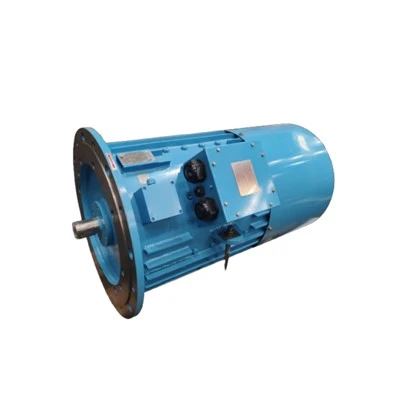
If you’re not sure what frame size you need, or you have questions about custom frames, cross-referencing, or any other DC motor needs, reach out to our team to talk through your project. We’re here to help you make the right choice, no stuffy sales pitches or confusing jargon. Let’s get your project moving.
Low Voltage AC Motor References
NEMA Standards Publication No. MG1-2023, Motors and Generators, National Electrical Manufacturers Association
IEC 60034-1:2022, Rotating electrical machines – Part 1: Rating and performance, International Electrotechnical Commission
DC Motor Frame Size Guide, Automation Direct, 2024
“Selecting the Right DC Motor for Industrial Applications,” Industry Week, March 2024
Xi’an Simo Motor Co., Ltd.
Xi’an Simo Motor Co., Ltd. is well-known as one of the leading dc motor manufacturers and suppliers in China. Please feel free to buy high-grade dc motor in stock here and get quotation from our factory. All customized products are with high quality and low price.
Address: No. 159 Mingguang Road Economic and Technological Development Zone, Xi’an, Shaanxi Province, China
E-mail: mkt-sales@simo.com.cn
WebSite: https://www.simomotor.com.cn/
