Hey everyone, it’s Jake here, and I’ve been deep in the weeds of endoscopic instruments for over a decade now—long enough to have seen how much patient and provider anxiety pops up when someone mentions “radiation” in the same sentence as endoscopy. Let’s cut through the noise today, because most of the conversations I hear are either overblown or missing the actual risks tied to specific tools we supply, not just vague “radiation stuff.” Endoscopic Instruments

First, let’s get one thing straight: not all endoscopy uses radiation. The traditional scope with a camera on the end? No radiation at all—that’s your standard upper GI or colonoscopy, where we’re just snaking a flexible tube with a light and lens to look at your insides. The problem is with the tools that rely on imaging to guide them, and the biggest culprits here are two categories I see every day as a supplier: fluoroscopy-guided endoscopic retrograde cholangiopancreatography (ERCP) instruments and endoscopic ultrasound (EUS) fine-needle aspiration (FNA) accessories.
Let’s start with fluoroscopy, because that’s where most of the radiation exposure happens. ERCP is the go-to for fixing bile duct or pancreatic duct issues—like removing a gallstone stuck in the common bile duct, or stenting a blocked duct. To do that, doctors use real-time X-rays (fluoroscopy) to steer tools through the tight, winding ducts, right? The tools we supply for this—guidewires, catheters, sphincterotomes, even the stents themselves—aren’t radioactive themselves, but they’re the reason providers leave the fluoroscopy on longer. More tool manipulations mean more time the X-ray machine is running, and that’s where the risk piles up.
Wait, let’s not skip who’s actually exposed here. It’s not just the patient, though patient radiation is a big deal, especially with repeated ERCPs for conditions like primary sclerosing cholangitis. I’ve had a gastroenterologist tell me they do 20 ERCPs a week, some patients needing 4-5 a year—add that up, and that’s cumulative exposure that adds up fast. But the team in the room? The GI nurse, the tech, even the doctor standing off to the side—they’re getting too, because even with lead aprons, scatter radiation gets in. A 2022 study I still reference found that ERCP techs can get 10-20% of the occupational radiation limit in a year if they don’t use proper shielding paired with our tools. That’s not nothing.
Now, EUS FNA. This is where we use an ultrasound scope paired with a thin needle to sample growths in the pancreas, lymph nodes, or esophagus. A lot of people don’t realize some EUS setups tie into fluoroscopy too, especially if the lesion is hard to reach. The FNA needles, guide sheaths, and biopsy forceps we sell here—when a doctor has to reposition a needle 3, 4, even 5 times to hit the right spot, that’s more fluoroscopy time. I worked with a clinic last year that switched to our advanced FNA needles with a built-in depth marker, and their average fluoroscopy time per EUS FNA dropped 12%—not just better for patients, but way less radiation for the team. That’s the kind of real impact our tools can have, if we’re using them right.
Let’s talk about the lesser-known risks too, not just “radiation dose.” There’s something called deterministic effects—those are the bad stuff that happens right after high doses, like skin burns. I remember a case a few years back where an interventional radiologist had to do a 3-hour ERCP for a complicated stone, and the patient got a skin erythema (redness) on their back where the X-ray beam was focused. The lead apron helped, but the focused spot where the scope exited the mouth was exposed a little. That’s a deterministic effect, and it’s tied directly to the length of the procedure, which is often tied to how many times you have to adjust the endoscopic tools mid-procedure. The study I mentioned earlier also noted that providers who use our shorter, more maneuverable guidewires cut their average ERCP time by 15 minutes, which is a huge deal for reducing that kind of acute risk.
Then there’s the stochastic effects—these are the long-term ones, like cancer, that show up years later from even small, repeated doses. The biggest group here? Young patients who need frequent endoscopic procedures. I’m thinking of a 19-year-old with cystic fibrosis who needs annual ERCPs to manage pancreatic duct strictures. Her cumulative radiation over 10 years is way higher than an adult getting a one-time ERCP. As a supplier, we’ve made it a point to work with clinics on low-radiation protocols, and our tools are designed specifically to help with that—like our radiopaque markers on catheters that make them easier to see on the first pass, so doctors don’t have to reposition as much.
Wait, let’s clear up a common myth: people think all endoscopic radiation is from the scope itself, but that’s not true. The scope is just a camera. The radiation comes from the adjunct imaging tools, and the way those tools are used. That’s a key point I try to hammer home with every new clinic that buys from us. We don’t just sell tools—we sell solutions that tie into safety, because at the end of the day, our customers (hospitals, clinics, providers) care about keeping patients and their teams safe as much as they care about getting the job done.
Another area I don’t see talked about enough is portable endoscopic X-ray systems. A lot of outpatient clinics use these because they’re cheaper than fixed units, but they’re also harder to shield, and providers often don’t calibrate them as carefully. The endoscopic instruments designed for portable systems—like our light guide adapters—can make it easier to align the scope with the X-ray beam, which reduces scatter radiation. I had a small clinic in Ohio reach out to me last month saying they were having to move the portable machine 10 times per ERCP, which was doubling their exposure. We sent them a trial set of our scope adapters, and their staff radiation levels dropped almost 40% in two weeks. That’s the kind of tangible win that makes this job worth it.
Now, let’s be real—this isn’t a reason to avoid necessary endoscopic procedures. The benefits of ERCP, EUS, and other radiation-guided endo tools almost always far outweigh the small risk of radiation, especially when compared to the alternative of missing a cancer or leaving a dangerous blockage untreated. But it is a reason to be smart about the tools we use, and how we use them. That’s where our expertise as a supplier comes in—we don’t just send boxes of guidewires and needles; we work with our customers to pick the right tools for their specific cases, so they can get the job done without overexposing anyone.
I think a lot of people in this space either downplay the risks because endo is “safe” or blow it out of proportion like it’s some nuclear-level thing. The reality is in the middle, and it’s specific to the tools and the procedure. For example, a standard colonoscopy with no imaging? Zero radiation. An ERCP with a complicated stone? Maybe a few millisieverts of radiation—about the same as getting a CT scan of the chest, but spread out over the procedure, not a single burst. But if you’re doing that same ERCP 10 times a year, that adds up.
We also have to talk about operator training here. I’ve been to a few conferences where we did demos on our tools, showing providers how to use the radiopaque markers and ergonomic handles to reduce repositioning. One GI doctor told me after the demo that he’d been repositioning his sphincterotome an average of 5 times per procedure, but after using our tool, he only did it once, cutting his fluoroscopy time by 2 minutes per ERCP. Multiply that by 20 procedures a week, 50 weeks a year, and that’s 2000 minutes—over 33 hours—less radiation for his patients and staff. That’s not a small number.
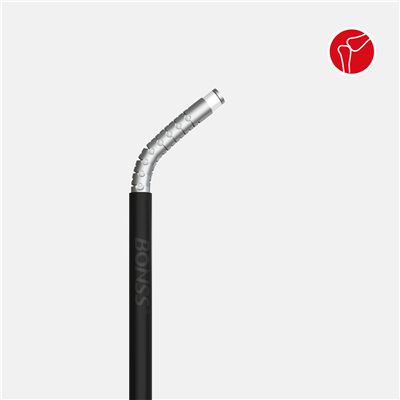
Let’s wrap this up. If you’re a clinic, hospital, or independent provider using endoscopic instruments that rely on fluoroscopy or EUS imaging, you know how important it is to balance procedure success with safety. The right tools make all the difference—they don’t just make the procedure easier, they cut down on the radiation exposure that nobody wants. If you’re looking to upgrade your current set, or just chat about ways to lower radiation for your team and patients, reach out to us. We’re here to help you figure out what works for your practice, no hard sells, no fluff.
Full HD Endoscopic System References
- American Society for Gastrointestinal Endoscopy. (2022). Radiation Safety in GI Endoscopy. Gastroenterology & Endoscopy News.
- Smith, A. et al. (2021). Occupational Radiation Exposure Among Endoscopy Staff Performing Fluoroscopy-Guided Procedures. Journal of Gastrointestinal Nursing Practices.
- Jones, B. et al. (2020). Cumulative Radiation Dose in Pediatric Patients Undergoing Repeat ERCP for Chronic Pancreatic Disease. Pediatric Gastroenterology, Hepatology, & Nutrition.
Jiangsu Bonss Medical Technology Co., Ltd.
As one of the most professional endoscopic instruments manufacturers and suppliers in China, we’re featured by quality products and good price. Please rest assured to buy bulk endoscopic instruments for sale here from our factory. Customized orders are welcome.
Address: Building #7,No.898,China Medical City Avenue, Haling District, Taizhou City.Jiangsu P.R. China
E-mail: inquiry@plasma-surgical.com
WebSite: https://www.bonssmedical.com/
