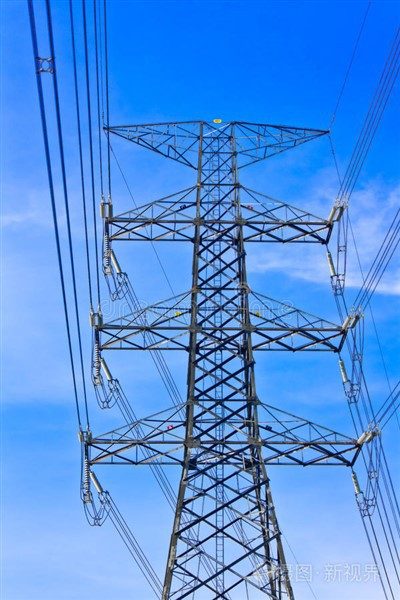
In the era of the Internet of Things (IoT), communication towers play a pivotal role in enabling the seamless operation of billions of connected devices. As a supplier of communication towers, I’ve witnessed firsthand how these structures have evolved to support the ever – expanding IoT ecosystem. In this blog, I’ll delve into the mechanisms by which communication towers support IoT devices, exploring the technologies, challenges, and future prospects. Communication Towers
The Foundation of IoT Connectivity
At the heart of the IoT concept lies the ability of devices to communicate with each other and with central systems. This requires a reliable and widespread network infrastructure, and communication towers are the cornerstone of this infrastructure. These towers are equipped with various types of antennas and transceivers that can transmit and receive signals across different frequencies.
For IoT devices, communication towers provide the necessary range and coverage. Many IoT applications, such as smart city sensors, environmental monitoring devices, and industrial asset trackers, are deployed in outdoor or remote locations. Communication towers can reach these areas, ensuring that the data generated by these devices can be transmitted back to the cloud or other data centers for processing and analysis.
Wireless Communication Technologies Supported by Towers
1. Cellular Networks
Cellular networks are one of the most common ways for IoT devices to connect to the internet. Communication towers are the backbone of cellular networks, supporting technologies like GSM, CDMA, LTE, and now 5G.
- GSM and CDMA: These older cellular technologies are still used by some IoT devices, especially those that require low – cost and low – data – rate communication. For example, simple asset tracking devices in the logistics industry may use GSM to send periodic location updates. Communication towers with GSM/CDMA capabilities can cover large areas, making them suitable for these types of applications.
- LTE: Long – Term Evolution (LTE) offers higher data rates and better reliability compared to its predecessors. Many IoT applications, such as smart meters in the energy sector and connected vehicles, rely on LTE for real – time data transmission. Our communication towers are designed to support LTE networks, ensuring that these IoT devices can connect with high – speed and stable signals.
- 5G: The advent of 5G technology has opened up new possibilities for the IoT. 5G offers extremely low latency, high data rates, and massive device connectivity. This is crucial for emerging IoT applications like autonomous vehicles, smart factories, and augmented reality. Our communication towers are being upgraded to support 5G technology, enabling seamless communication between a large number of IoT devices.
2. LPWAN Technologies
Low – Power Wide – Area Network (LPWAN) technologies are specifically designed for IoT devices that require long – range communication with low power consumption. Two popular LPWAN technologies are LoRaWAN and Sigfox.
- LoRaWAN: LoRaWAN is an open – standard LPWAN technology that allows IoT devices to communicate over long distances (up to several kilometers) while consuming very little power. Our communication towers can be equipped with LoRaWAN gateways, which act as intermediaries between the IoT devices and the backend network. This enables applications such as smart agriculture, where sensors in the fields can transmit data about soil moisture, temperature, and humidity to the farmers’ control centers.
- Sigfox: Sigfox is another LPWAN technology that focuses on ultra – low – power and long – range communication. It uses unlicensed radio frequencies to provide connectivity for IoT devices. Our communication towers can support Sigfox networks, making it possible for various IoT applications, such as waste management sensors and environmental monitoring stations, to operate efficiently.
Enhancing IoT Connectivity with Advanced Features
1. Beamforming
Beamforming is a technique used in communication towers to focus the radio signals in a specific direction. This can significantly improve the signal strength and quality for IoT devices in that area. By using beamforming, our communication towers can direct the signals towards the IoT devices, reducing interference and increasing the overall efficiency of the network. This is particularly useful in dense urban areas where there are many IoT devices competing for the same frequency spectrum.
2. MIMO Technology
Multiple – Input Multiple – Output (MIMO) technology is another advanced feature that can enhance IoT connectivity. MIMO uses multiple antennas at both the transmitter (communication tower) and the receiver (IoT device) to improve the data transfer rate and reliability. Our communication towers are equipped with MIMO technology, which allows them to communicate with a larger number of IoT devices simultaneously and with higher data rates. This is essential for applications like smart cities, where there are thousands of interconnected devices such as traffic sensors, streetlights, and environmental monitors.
Challenges in Supporting IoT Devices and How We Address Them
1. Spectrum Congestion
As the number of IoT devices continues to grow, the demand for radio spectrum is increasing exponentially. This has led to spectrum congestion, which can degrade the performance of IoT networks. To address this issue, we work closely with regulatory authorities to ensure that our communication towers operate on the most appropriate frequency bands. We also invest in research and development to develop new technologies that can make more efficient use of the available spectrum, such as cognitive radio and spectrum sharing.
2. Power Consumption
Many IoT devices are battery – powered, and they need to operate for long periods without frequent battery replacements. Communication towers need to be designed to minimize the power consumption of the IoT devices they support. We achieve this by optimizing the transmission power of our towers and using energy – efficient components. Additionally, we are exploring the use of renewable energy sources, such as solar panels, to power our communication towers, reducing their environmental impact and ensuring a reliable power supply.
3. Security
IoT devices are often vulnerable to cyberattacks, and protecting the data transmitted between these devices and the communication towers is of utmost importance. We implement strict security measures, including encryption, authentication, and intrusion detection systems, to safeguard the integrity and confidentiality of the IoT data. Our communication towers are also designed to be resilient against physical attacks, ensuring the continuous operation of the IoT network.
Future Prospects of Communication Towers in the IoT Ecosystem
The future of communication towers in the IoT ecosystem is very promising. As the IoT continues to expand into new industries and applications, the demand for reliable and high – performance communication infrastructure will only increase.
We are currently researching and developing new types of communication towers that are more compact, energy – efficient, and capable of supporting emerging technologies. For example, we are exploring the use of small cells and distributed antenna systems to provide more targeted and high – density coverage in areas with a large number of IoT devices.
In addition, the integration of communication towers with edge computing technologies will enable data processing to be done closer to the IoT devices, reducing latency and improving the overall performance of the IoT network. This will open up new possibilities for real – time applications such as healthcare monitoring and autonomous robot control.
Contact Us for Your IoT Communication Tower Needs
If you are looking for a reliable communication tower supplier to support your IoT devices, we are here to help. Our team of experts has extensive experience in designing, manufacturing, and installing communication towers that are optimized for IoT applications. We offer a wide range of tower solutions, from traditional macro towers to small cells and distributed antenna systems, to meet your specific requirements.
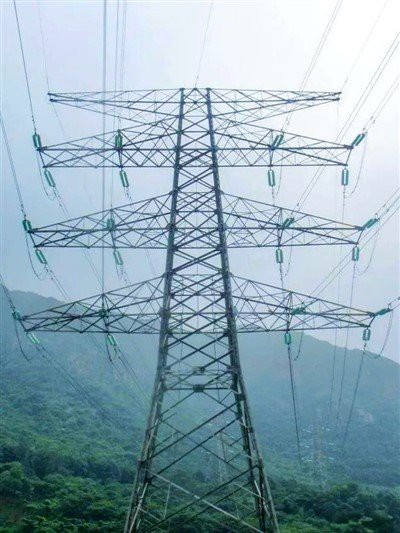
Tension Towers Whether you are a smart city developer, an industrial IoT provider, or a consumer electronics manufacturer, we can work with you to develop a customized communication tower solution that ensures the seamless operation of your IoT devices. Contact us today to start a conversation about your IoT communication needs and explore how our communication towers can support your business.
References
- Akyildiz, I. F., Su, W., Sankarasubramaniam, Y., & Cayirci, E. (2002). Wireless sensor networks: A survey. Computer networks, 38(4), 393 – 422.
- Atzori, L., Iera, A., & Morabito, G. (2010). The Internet of Things: A survey. Computer networks, 54(15), 2787 – 2805.
- Mitola, J., & Maguire Jr, G. Q. (1999). Cognitive radio: Making software radios more personal. IEEE personal communications, 6(4), 13 – 18.
- Rappaport, T. S., et al. (2019). What is 5G? IEEE Access, 7, 68162 – 68195.
Hebei Yifeng Steel Structure Co., Ltd.
As one of the most professional communication towers manufacturers and suppliers in China, we offer a wide range of products with superior quality. Please feel free to buy cost-efficient communication towers for sale here from our factory. Contact us for more details.
Address: Guangchuan Town Industrial Zone, Jing County, Hengshui City, Hebei Province
E-mail: hbyfgjg@163.com
WebSite: https://www.yf-powertowers.com/
