In the modern manufacturing landscape, precision and quality are non – negotiable. As a supplier of CNC (Computer Numerical Control) Robots, I’ve witnessed firsthand how these remarkable machines are revolutionizing quality control across various industries. In this blog, I’ll delve into the ways in which a CNC Robot contributes to quality control, highlighting the key features and advantages that make it an indispensable tool for manufacturers aiming to deliver high – quality products. CNC Robot
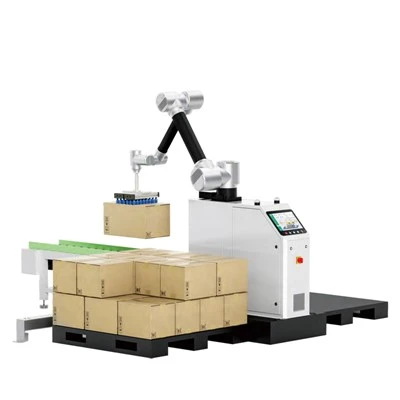
1. Precision and Repeatability
One of the most significant contributions of a CNC Robot to quality control is its ability to achieve unparalleled precision and repeatability. Unlike manual machining processes, which are subject to human error and fatigue, a CNC Robot operates based on pre – programmed instructions. These instructions are highly detailed, specifying every movement, speed, and depth of cut with extreme accuracy.
For instance, in the aerospace industry, where components must meet extremely tight tolerances, a CNC Robot can machine parts to within micrometers of the desired dimensions. This level of precision ensures that the parts fit perfectly together during assembly, reducing the risk of mechanical failures and improving overall product performance.
Moreover, once a program is set up, a CNC Robot can repeat the same machining process over and over again with minimal variation. This repeatability is crucial for mass production, as it guarantees that each part produced is identical to the next. In the automotive industry, for example, CNC Robots are used to manufacture engine components. The ability to produce consistent parts ensures that engines run smoothly and efficiently, enhancing the reliability of the vehicles.
2. Real – Time Monitoring and Feedback
CNC Robots are equipped with advanced sensors and monitoring systems that allow for real – time quality control. These sensors can detect a wide range of parameters, such as cutting forces, tool wear, and temperature. By continuously monitoring these parameters, the CNC Robot can identify potential issues before they lead to defective products.
For example, if a cutting tool is starting to wear out, the sensors can detect a change in the cutting forces. The CNC Robot can then automatically adjust the machining parameters, such as the cutting speed or feed rate, to compensate for the tool wear. In some cases, the robot can even alert the operator to replace the tool, preventing further damage to the workpiece.
In addition to monitoring the machining process, CNC Robots can also perform in – process inspections. Using sensors such as laser scanners or vision systems, the robot can measure the dimensions of the workpiece during machining. If the measured dimensions deviate from the desired values, the robot can make immediate adjustments to correct the problem. This real – time feedback loop ensures that quality control is integrated into every step of the manufacturing process.
3. Reduction of Human Error
Human error is a significant factor in quality control issues. Manual machining processes require a high level of skill and concentration, and even the most experienced operators can make mistakes. These mistakes can range from simple measurement errors to more serious errors, such as incorrect tool selection or improper machining techniques.
CNC Robots eliminate many of these sources of human error. Since the machining process is automated, there is no need for operators to manually control the machine. This reduces the risk of errors caused by fatigue, distraction, or lack of experience. Additionally, CNC Robots are not subject to the same physical limitations as humans, such as tremors or inconsistent hand movements, which can affect the quality of the machined parts.
For example, in the production of medical devices, where precision and quality are of utmost importance, CNC Robots are used to ensure that the parts are manufactured to the highest standards. By eliminating human error, the risk of defective products is significantly reduced, which is crucial in an industry where the consequences of a faulty product can be life – threatening.
4. Flexibility and Adaptability
Another advantage of CNC Robots in quality control is their flexibility and adaptability. These robots can be easily reprogrammed to perform different machining operations, allowing manufacturers to quickly adapt to changing production requirements. This flexibility is particularly important in industries where product designs are constantly evolving, such as the consumer electronics industry.
For instance, if a new smartphone model requires a different shape or size of a particular component, the CNC Robot can be reprogrammed to produce the new part without the need for extensive retooling. This not only saves time and money but also ensures that the quality of the new part is consistent with the previous ones.
In addition, CNC Robots can be integrated with other manufacturing systems, such as conveyor belts or automated storage and retrieval systems. This integration allows for seamless material handling and production flow, further enhancing the efficiency and quality of the manufacturing process. For example, in a large – scale manufacturing plant, CNC Robots can work in tandem with other robots and machines to produce a complete product, from raw material handling to final assembly.
5. Data Collection and Analysis
CNC Robots generate a wealth of data during the machining process. This data includes information about the machining parameters, tool usage, and workpiece dimensions. By collecting and analyzing this data, manufacturers can gain valuable insights into the quality of their products and the efficiency of their manufacturing processes.
For example, by analyzing the data on tool wear, manufacturers can determine the optimal time for tool replacement. This not only extends the life of the tools but also ensures that the machining process is always performed at its best, resulting in higher – quality products.
Moreover, data analysis can help manufacturers identify trends and patterns in quality control issues. If a particular type of defect occurs frequently, the data can be used to pinpoint the root cause of the problem, such as a faulty machine setting or a sub – standard raw material. By addressing these issues, manufacturers can continuously improve the quality of their products.
Industrial Robot In conclusion, CNC Robots play a crucial role in quality control. Their precision, repeatability, real – time monitoring, ability to reduce human error, flexibility, and data – collection capabilities make them an essential tool for modern manufacturers. If you’re looking to enhance the quality of your products and improve the efficiency of your manufacturing processes, a CNC Robot from our company could be the solution you need. We invite you to contact us to discuss your specific requirements and explore how our CNC Robots can contribute to your quality control efforts.
References
- Groover, M. P. (2019). Fundamentals of Modern Manufacturing: Materials, Processes, and Systems. Wiley.
- Dornfeld, D. A., Min, S., & Shi, X. (2006). Handbook of Machining with Grinding Wheels. CRC Press.
- Wu, S., & Dornfeld, D. (2006). Virtual Machine Tool: Modeling and Simulation for Performance Prediction and Optimization. Springer.
Robotic Technology (GD) Co., Ltd.
Robotic Technology (GD) Co., Ltd. is one of the most experienced cnc robot manufacturers and suppliers in China, also supports custom service and one year warranty. Please feel free to wholesale CE approved cnc robot for sale here from our factory. Contact us for quotation.
Address: Room 102, No. 30,Hengfeng 2nd Road,Daguo, Changping Town, Dongguan City,Guangdong,China
E-mail: admin@iroboticplus.com
WebSite: https://www.rb-tic.com/
