As a seasoned supplier in the range hood fan industry, I have encountered numerous customers who are eager to enhance the suction power of their range hood fans. In today’s blog, I will share some practical insights and strategies based on my years of experience and industry knowledge to help you achieve this goal. Range Hood Fan
Understanding the Basics of Range Hood Fan Suction Power
Before delving into the ways to increase suction power, it’s essential to understand what suction power is and how it works. Suction power, often measured in cubic feet per minute (CFM), refers to the volume of air that a range hood fan can move in one minute. A higher CFM rating indicates that the fan can remove more air and smoke from your kitchen in a shorter period.
Several factors can affect the suction power of a range hood fan, including the size of the fan, the motor’s strength, the ductwork, and the installation height. By addressing these factors, you can significantly improve the performance of your range hood fan.
Upgrading the Fan Motor
One of the most effective ways to increase the suction power of your range hood fan is to upgrade the fan motor. A more powerful motor can spin the fan blades faster, creating stronger airflow and suction. When selecting a new motor, consider its horsepower (HP) rating. Generally, a higher HP motor will provide more suction power. However, it’s also important to ensure that the motor is compatible with your range hood’s existing components.
If you’re not comfortable replacing the motor yourself, I recommend hiring a professional technician. They have the expertise and tools to install the new motor safely and correctly, ensuring optimal performance.
Optimizing the Fan Blades
The design and condition of the fan blades can also have a significant impact on suction power. Over time, the blades can accumulate grease and dirt, which can reduce their efficiency. Regular cleaning of the fan blades is essential to maintain optimal performance. You can remove the blades and soak them in a degreasing solution to remove stubborn grease.
In addition to cleaning, you may also consider upgrading the fan blades. Some range hood fans come with adjustable or variable-speed blades, which can be optimized for different cooking styles and levels of smoke. For example, if you often cook with high heat or use a lot of oil, you may want to adjust the blades to a higher speed to increase suction power.
Improving the Ductwork
The ductwork is an often-overlooked component that can significantly affect the suction power of your range hood fan. If the ductwork is too long, too narrow, or has too many bends, it can restrict airflow and reduce suction power. To improve the ductwork, you can take the following steps:
- Shorten the Duct Length: Try to keep the duct as short as possible to minimize resistance. If the duct needs to be routed around obstacles, use gentle curves instead of sharp bends.
- Increase the Duct Diameter: A wider duct allows for more air to flow through, reducing resistance and increasing suction power. Consider upgrading to a larger diameter duct if possible.
- Seal the Duct Joints: Leaky duct joints can cause air to escape, reducing the efficiency of the range hood fan. Use duct tape or mastic sealant to seal all joints and connections.
Adjusting the Installation Height
The installation height of the range hood fan can also impact its suction power. If the fan is installed too high above the cooking surface, it may struggle to capture smoke and odors effectively. On the other hand, if it’s installed too low, it may interfere with your cooking.
The ideal installation height for a range hood fan depends on several factors, including the type of cooking you do and the size of the range hood. As a general rule, the bottom of the range hood should be 24 to 30 inches above the cooking surface for electric stoves and 30 to 36 inches above for gas stoves.
Using a Range Hood Booster Fan
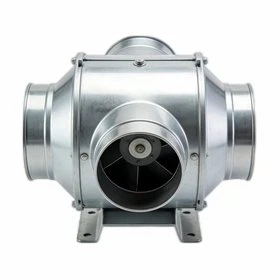
If you have tried all the above methods and still find that your range hood fan lacks sufficient suction power, you may want to consider using a range hood booster fan. A booster fan is a secondary fan that can be installed in the ductwork to increase airflow and suction.
There are two main types of booster fans: inline boosters and centrifugal boosters. Inline boosters are installed directly in the duct, while centrifugal boosters are typically installed near the range hood. When choosing a booster fan, consider its CFM rating, noise level, and compatibility with your existing range hood system.
Conclusion
Increasing the suction power of your range hood fan doesn’t have to be a daunting task. By understanding the basic principles of suction power and implementing the strategies outlined in this blog, you can significantly improve the performance of your range hood fan and create a cleaner, healthier kitchen environment.
High Speed Fan As a range hood fan supplier, I am committed to providing high-quality products and expert advice to help you achieve the best results. If you have any questions or need further assistance, please don’t hesitate to contact me. I look forward to working with you to enhance your kitchen’s ventilation system.
References
- "Range Hood Buying Guide." Consumer Reports.
- "How to Increase Range Hood Suction Power." This Old House.
- "The Ultimate Guide to Range Hoods." Home Depot.
Shengzhou Geeking Electric Appliance Technology Co., Ltd.
We’re well-known as one of the leading range hood fan manufacturers and suppliers in China. With abundant experience, we warmly welcome you to buy bulk discount range hood fan in stock here and get free sample from our factory. Quality products and low price are available.
Address: No. 19, Putian Avenue, Pukou Subdistrict, Shengzhou City
E-mail: 13588516010@163.com
WebSite: https://www.geekingfan.com/
